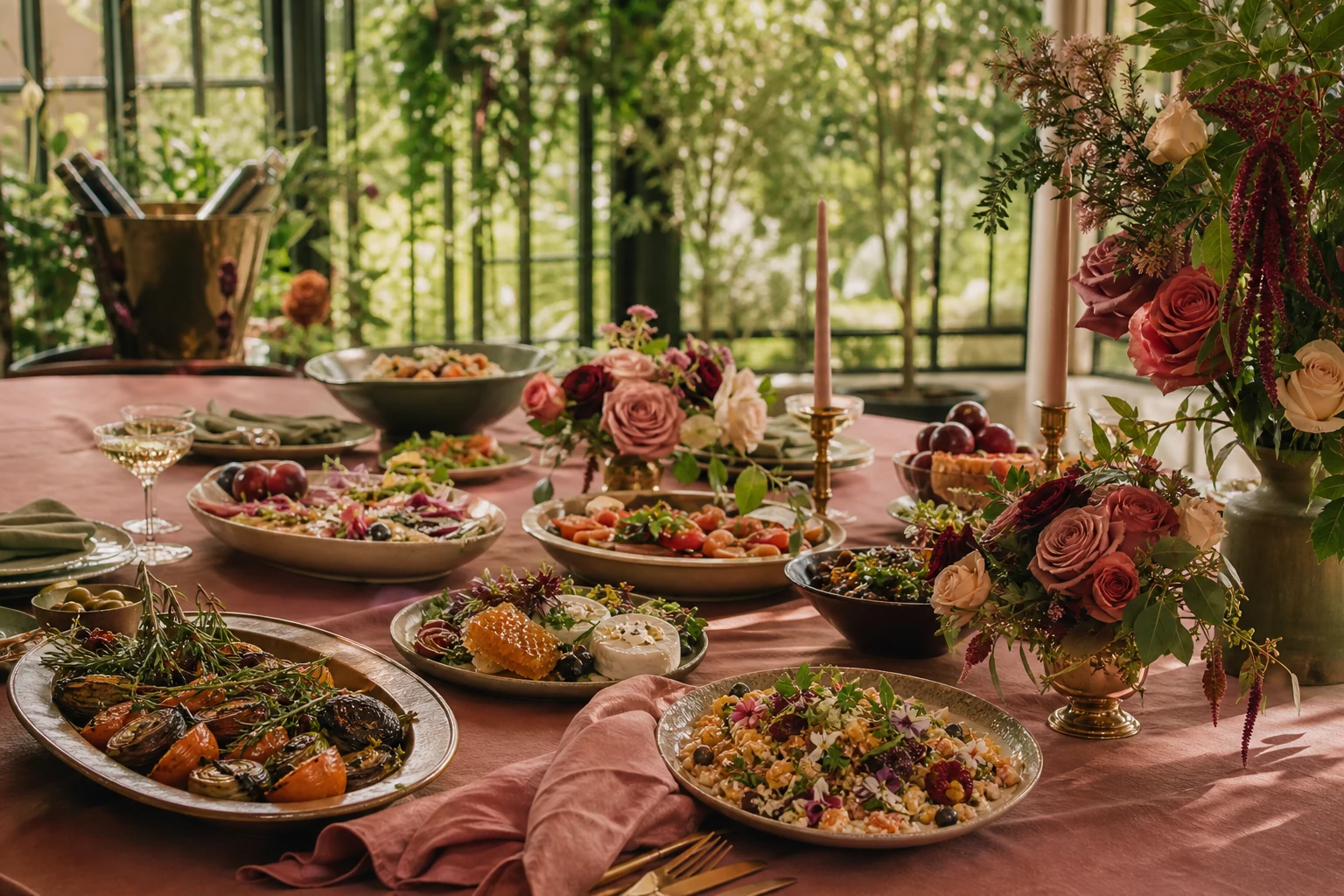
Working context
Food is only part of why a gathering feels good. Guests also notice whether there was somewhere to put a coat, whether a drink appeared soon after they arrived, whether the room let them talk, and whether the evening had a shape. These things happen between the plates, and they are the product of small decisions made in advance.
This guide looks at four areas: space, timing, service and the host. The scenes are hypothetical, and no particular venue, caterer or event is described. Whether you are hosting six at home or planning a larger occasion in a hired space, the questions are similar. Walk through them with a floor plan or even a sketch on the back of an envelope.
SECTION 01Arrange space so guests can arrive, settle and move
Imagine a guest walking in. Where do they leave coats and bags? Where do they find a drink? Where do they stand while they wait for others? Group these stations so that arrivals do not block the door, and place drinks away from the entrance so people drift into the room. Provide places to sit and to put down a plate, and leave clear routes for carrying food and for anyone using a mobility aid. Check that lighting suits the time of day and that the noise level allows conversation. In a hypothetical home gathering, moving a table a short distance from the kitchen door might ease the crowd that always forms there.
SECTION 02Decide which moments need precision
Not every part of a gathering needs a timetable. Choose the few moments where timing really matters, such as when food must be served hot, when a speech is to be given, or when guests with a fixed departure need to eat. Build everything else around generous margins. Write a simple run of events, working backwards from the moment guests sit down, and include the unglamorous steps: chilling drinks, warming plates, clearing space in the fridge. Share the timeline with anyone who is helping. Expect the evening to drift and decide in advance what you will drop if it runs late. A relaxed host who cuts a course is better company than a stressed one who serves it.
SECTION 03Think about service, replenishment and clearing
A good evening quietly handles the flow of food and drink. Decide whether guests will serve themselves, be served at the table or move between stations, and make sure there are enough serving utensils so dishes can travel. Plan for replenishing drinks, water and the sharing plates without making it the host's full-time job. Ask a trusted friend or a hired helper to handle clearing at natural pauses so that the table is not crowded with finished plates. For hot and cold dishes, follow guidance from your local official food-safety authority about keeping food at safe temperatures, and do not leave perishable items out for long periods. Keep a few simple tools nearby, including a cloth, a bin and spare napkins.
Checks to carry into the decision
- Walk through the evening as a guest would, from the door to a seat with a drink.
- Mark where coats, bags, drinks and food will go so arrivals do not bunch at the entrance.
- Confirm there are enough seats, surfaces and clear routes, including for anyone with mobility needs.
- Write a backward timeline from the moment guests sit down and share it with helpers.
- Decide in advance what you will cut if the evening runs late.
- Assign someone to refill water and drinks and someone to clear at natural pauses.
- Review official food-safety guidance for keeping hot and cold dishes safe during service.
How to get the most from it
Read menu direction first if you are still deciding what to serve, gathering flow when you are picturing the room, and host notes in the final week before the day. Keep a single page of decisions beside you and write the answers to each question as you go.
Common questions
Questions readers ask
How early should guests be able to get a drink?
As soon as practical after arrival, ideally within a few minutes. A drink gives people something to hold and something to do, and it signals welcome. Place it where it will not create a queue at the door, and have a non-alcoholic option that looks as thoughtful as the others.
Is a buffet or seated service better?
Neither is better in general. Buffets suit larger or mixed groups and give guests control, but need space and clear traffic routes. Seated service feels more formal and makes timing easier to control, though it requires more help. Choose according to the room, the guests and your own energy.
How do I stay present as the host?
Make decisions early and delegate what you can. Prepare food that can wait, set up stations in advance and give helpers clear tasks. Choose two moments in the evening when you will sit down deliberately. Being relaxed matters more to guests than perfect execution of every detail.
Bringing it together
The best gatherings feel easy because someone thought about the awkward spots in advance. Walk the route, mark the moments that need precision, and let everything else breathe. After the event, jot down what worked and what snagged. Those notes become the starting point for the next occasion, and they will serve you better than any template.
These guides are general hosting and menu-planning ideas from an independent publication and are not food-safety, allergy or medical advice; check food-safety rules with your local official authority and ask guests or a qualified professional about dietary and health needs.